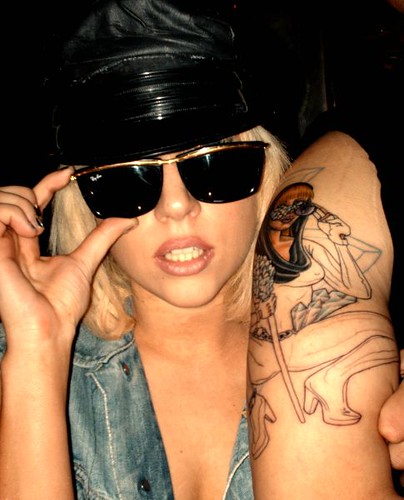
The Poker Face singer is probably best known for her outlandish outfits and crazy hair and fun dance songs. But Lady Gaga real name, Stefani Joanne Angelina Germanotta. But do not dare call her that, she only responds to Lady Gaga or Gaga. Well Lady Gaga is also no stranger to the tattoo gun. Lady Gaga has a total of three tattoos.
 The one tattoo that most everyone has seen is the black peace symbol located on her left wrist. If you look at it, it looks upside down but from Lady Gaga's view it is right side up. She says she got this tattoo because of John Lennon. She is a huge John Lennon and Beatles fan and she grew up two miles from the imagine memorial. She she got the tattoo to help reminder her about the important things in life, like give peace a chance.
 She also has a tattoo on her left should blade. This tattoo is of a Hawaiian flower. Her last tattoo is on her lower back and on her side. Gaga says that she got her first tattoo when she was 17 and got a fake id so she could do so. Of course her parents were not too happy. Well Gaga obviously regrets the tattoo design she got because she has gotten it covered up. She has three very large white roses on her side with some black vines and another set of the same roses on her lower back with some black vines that Kat Von D of LA Ink did for her.